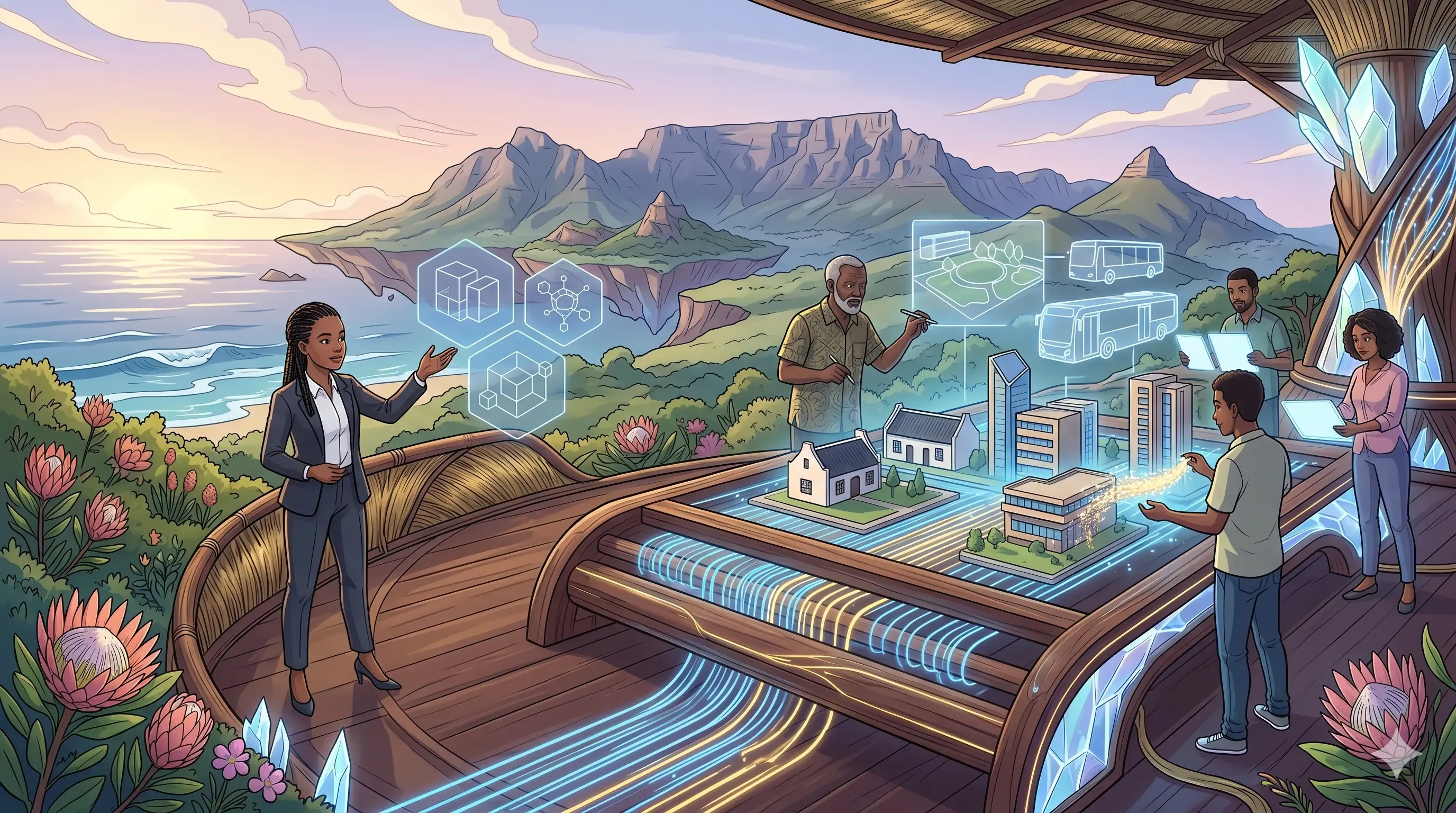
The Design Process: Crafting Tomorrow's Realities in the South African Landscape
16 April 2026
Discover how a robust design process empowers South African businesses to transform visionary concepts into impactful solutions, fostering innovation and customer delight.
In the vibrant, ever-evolving tapestry of the South African business world, merely having a brilliant concept is but the first whisper of an idea. To truly thrive, to manifest visionary solutions that resonate deeply, requires a carefully sculpted, adaptive, and profoundly human-centred journey of creation. This is where a robust design process transcends its conventional definition, blossoming into an indispensable strategic methodology. Far from being confined to the realm of aesthetics, it is a purposeful voyage that empowers organisations to delve into challenges with profound empathy, to conjure impactful solutions from the ether, and to bring those solutions to vivid life with meticulous precision. For businesses across South Africa, embracing a well-defined design process is akin to discovering a master key – one that unlocks unexplored market constellations, cultivates profound customer delight, and charts a course for enduring growth.
Key Takeaways
- The design process is a systematic approach to problem-solving and innovation, crucial for navigating the complexities of the South African business environment.
- It prioritises deep user understanding and empathy, ensuring that solutions genuinely meet customer needs and market demands.
- A structured design process, encompassing phases like discovery, ideation, prototyping, and testing, reduces risks and fosters continuous improvement.
- Implementing a robust design process leads to more effective products, services, and systems, offering a significant competitive advantage.
Understanding the Design Process: An Overture to Creation
At its very heart, the design process is an intricate sequence of steps that guides visionary designers and dedicated teams in solving complex puzzles or forging new products, services, or systems. It is not a rigid, linear path, but rather a fluid, dynamic framework – an exquisite dance that encourages boundless exploration, daring experimentation, and meticulous refinement. While its forms may vary like the constellations in the night sky, most design processes share fundamental phases, all harmonised towards achieving an outcome that is simultaneously desirable, feasible, and viable.
Why a Structured Design Process Matters for South African Businesses: Weaving Futures with Foresight
For enterprises navigating the unique currents of South Africa's economic landscape, a structured design process offers a multitude of profound advantages. It acts as a compass, guiding them to:
-
Mitigate Risk: By delving deeply into understanding problems and gently testing nascent solutions early in their journey, businesses can gracefully sidestep costly missteps down the path.
-
Foster Innovation: It provides a fertile ground, a sacred space for creative thinking, encouraging teams to unearth and explore solutions beyond the conventional horizon.
-
Enhance User Experience: A human-centred design process ensures that every product and service is not just functional, but intuitive, genuinely useful, and a sheer delight for its intended audience.
-
Improve Efficiency: With clearly articulated stages and elegant iterative loops, development flows with seamless grace, curtailing wasted resources and accelerating the journey from concept to market.
-
Drive Competitive Advantage: Businesses that consistently unveil elegantly designed solutions naturally ascend, standing out like guiding stars in a crowded, competitive sky.
Phases of an Effective Design Process: The Alchemist's Journey
While the lexicon may shift like the seasons, most profoundly effective design process methodologies, such as the widely celebrated Design Thinking approach, traverse remarkably similar core stages. As eloquently articulated by the Interaction Design Foundation (IxDF), these stages typically include Empathise, Define, Ideate, Prototype, and Test. Let us unveil these transformative phases:
Discovery & Research (Empathise): Listening to the Whispers
This inaugural phase is a profound immersion, a journey into the heart of understanding. It involves carefully gathering intelligence about the users – their unarticulated needs, their silent frustrations, their nuanced behaviours, and the broader market zeitgeist. Activities here include intimate user interviews, insightful surveys, empathetic observation, diligent competitor analysis, and comprehensive market research. The ultimate aspiration is to cultivate a genuine, heartfelt empathy for the end-users, thus unveiling a holistic, luminous view of the problem space.
Defining & Ideation (Define & Ideate): Forging the Beacon, Unleashing Imagination
Once the wellspring of research has been thoroughly explored, the distilled insights are synthesised to forge a crystal-clear definition of the problem or opportunity. This culminates in framing a concise, user-centric problem statement, a true north star for the journey ahead. Following this, the ideation phase unfurls like a vibrant scroll, where teams collaboratively conjure a boundless array of potential solutions, free from the shackles of premature judgment. Techniques such as mind mapping, inspired sketching, and dynamic collaborative workshops are common here, nurturing the blossoming of divergent thought.
Prototyping & Development (Prototype): Breathing Life into Concepts
In this pivotal phase, selected visionary ideas are meticulously transformed into tangible prototypes – the first physical manifestations of thought. A prototype can be as ethereal as a simple paper sketch, as structured as a wireframe, as illustrative as a mock-up, or even as robust as a functional minimum viable product (MVP). The sacred purpose of prototyping is to render ideas concrete enough to be meticulously tested and thoughtfully evaluated. For businesses requiring solutions that are not merely robust but also elegantly scalable, particularly within the intricate dance of digital product development, the bedrock of reliable backend infrastructure is paramount during this stage. Ensuring that your development endeavours are supported by resilient and secure systems, much like the guardians of data found at Vault Infrastructure, is utterly essential for gracefully transitioning prototypes into deployable, living realities.
Testing & Iteration (Test): The Dialogue with Reality
With prototypes born, they are gently placed before real users to elicit invaluable feedback. This feedback is a precious gift, illuminating what resonates harmoniously and what yearns for refinement. The profound insights gleaned from testing lead to iterations – the careful, continuous refinements and enlightened modifications to the prototype. This iterative loop – a graceful dance of prototyping, testing, and refining – lies at the very epicentre of the design process, empowering teams to progressively elevate solutions based on the profound wisdom of real-world input.
Implementation & Launch: Unfolding into the World
Once a solution has been meticulously tested and refined, and all stakeholders gaze upon it with satisfaction, it gracefully transitions into the implementation phase. This encompasses the full-scale development, seamless deployment, and the grand launch of the product, service, or system into the wider world. Even after its magnificent unveiling, the continuous guardianship of monitoring performance and gathering ongoing feedback remains crucial for perpetual enhancement, often circling back to earlier stages of the design process for further, inspired transformations.
Optimizing Your Design Process for Success: The Art of Harmonious Creation
To amplify the inherent brilliance of your design process within the distinct South African context, consider these enlightened practices:
- Embrace Agility: While structured, the design process flourishes in an atmosphere of flexibility. Be poised to pivot and adapt with grace, guided by new revelations.
- Foster Collaboration: Weave together diverse teams – from the artistic minds of design and development to the strategic insights of marketing and sales – throughout the entire creative odyssey. A symphony of varied perspectives invariably leads to richer, more resonant solutions.
- The Guiding Star: Human Desirability: Unwaveringly, keep the end-user at the beating heart of every single decision. As IDEO U highlights, true design thinking embarks upon its journey with what is most desirable from a human point of view.
- The Unfolding Scroll of Progress: Release the desire for perfection in the initial draft. Instead, embrace the lyrical cycle of build, test, learn, and refine – a continuous unfolding.
- Charting the Constellation of Success: Define lucid metrics for triumph and diligently evaluate the profound outcomes of your design endeavours to eloquently demonstrate their return on investment.
Frequently Asked Questions
Q1: What is the main difference between the design process and design thinking?
A: The design process is a broad term referring to any structured sequence of steps used to create a solution. Design Thinking is a specific, human-centred methodology within the broader design process framework, emphasising empathy, ideation, and iterative prototyping to solve complex problems.
Q2: How long does a typical design process take?
A: The duration of a design process varies significantly depending on the project's complexity, the scope of the problem, the resources available, and the industry. Simple projects might take weeks, while complex enterprise solutions could span months or even years. The key is to maintain momentum through iterative cycles rather than aiming for a single, long development sprint.
Q3: Can the design process be applied to non-product related challenges, like business strategy?
A: Absolutely. The principles of the design process, particularly those rooted in Design Thinking, are highly applicable to a wide range of challenges beyond product development. Businesses use it to refine strategies, improve internal processes, enhance customer service, and even foster organisational culture. It's a versatile framework for tackling any complex problem with a user-centric and iterative approach.
Conclusion
The design process is far more than a mere methodology; it is a strategic imperative, a vital breath for South African businesses striving for sustainable innovation and a distinguished competitive edge. By systematically unravelling complexities, by conjuring creative solutions from the depths of imagination, and by rigorously validating those solutions with the authentic voices of real users, organisations can truly manifest products, services, and experiences that sing in harmony with their market. Embracing this structured yet wondrously flexible approach not only gently mitigates risks and thoughtfully optimises precious resources but, more profoundly, illuminates the path to a future where businesses do not merely survive, but truly flourish through the intentional, human-centred magic of design.